If you’ve ever noticed that your skin becomes drier, itchier, or more easily irritated as you get older, you’re not imagining it. Many people who never had sensitive skin or eczema before start developing these symptoms after age 50. So what’s really happening beneath the surface?
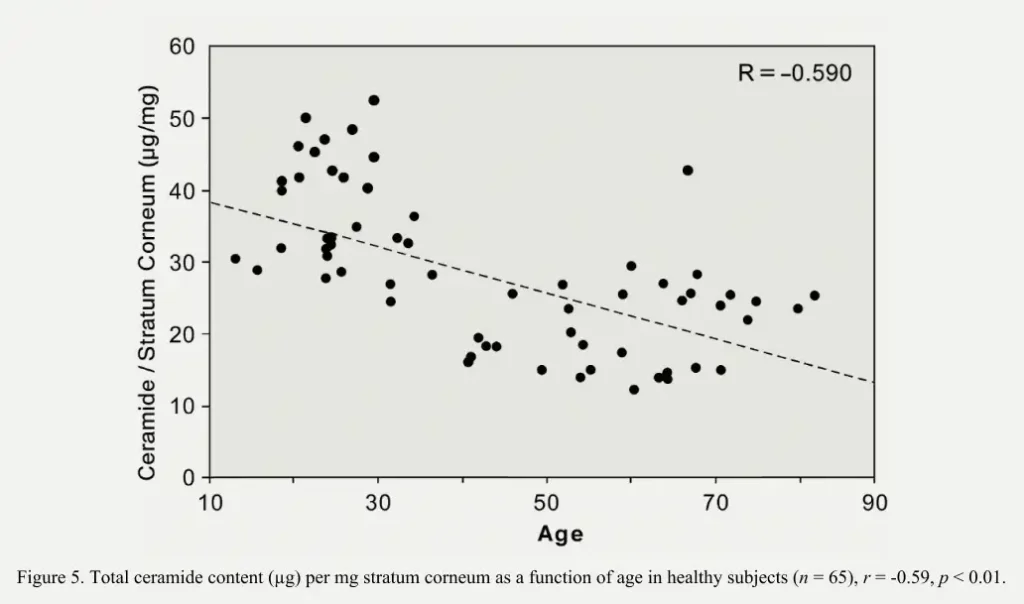
Adapted from Imokawa et al. (1990).
The Aging Skin Barrier: Slower, Thinner, Weaker
Your skin barrier works like a shield — keeping moisture in and irritants out. But as the years go by, this shield naturally starts to weaken.
Inside your skin are tiny structures called lamellar bodies. They release important lipids — mainly ceramides, cholesterol, and fatty acids — that form the outermost protective layer.
As we age:
- The number of lamellar bodies decreases
- The lipid content in the skin drops
- The rate of repair after damage slows down
This means your skin loses its ability to retain moisture and protect itself from environmental stressors. That’s why older adults often experience dryness, tightness, redness, and itchiness, even without any previous skin problems.
The Ceramide Connection
Ceramides make up nearly half of the skin’s lipid barrier. They’re the “glue” that holds skin cells together and keeps water from escaping.
Our bodies naturally produce ceramides — but as we age, that process slows down, much like collagen production. With fewer ceramides:
- The skin barrier becomes weaker and more porous
- Moisture evaporates faster
- The skin becomes more reactive to irritants and allergens
Scientific studies confirm that aged skin has significantly lower ceramide levels, as well as reduced activity of the enzymes that produce them. On top of that, the skin’s natural pH tends to rise with age — further reducing enzyme activity and delaying repair.
This slower barrier recovery is one of the main reasons older individuals are more prone to dryness, irritation, and eczema-like conditions.
Why Aging Skin Feels Drier — The Science Behind It
You might think dry skin simply means a lack of oil, but there’s more to it.
With age, the stratum corneum (the skin’s outermost layer) loses both lipids and water-retaining molecules. This leads to higher transepidermal water loss (TEWL) — meaning your skin is losing moisture faster than it can replace it.
This disruption also affects the cohesion between skin cells, making the surface rougher and more fragile. Over time, this can result in chronic dryness, itchiness, or even irritation after mild contact with soaps, fabrics, or the environment.
Restoring Skin Health from Within
The good news? Science shows that ceramides — whether applied topically or taken orally — can rebuild and strengthen the skin barrier.
Topical ceramide creams help lock in moisture externally, while oral ceramide supplements replenish your skin’s natural lipids from within.
Research on rice-derived ceramides has shown improvements in:
- Hydration and smoothness
- Reduced water loss (TEWL)
- Healthier, more resilient skin texture
Takeaway: Aging Skin Needs Extra Support
As we get older, our skin naturally loses its ability to repair and protect itself.
By restoring the skin’s natural lipids — especially ceramides — you can help maintain a stronger, healthier, and more hydrated complexion, even in your later years.
Ceramides are not just skincare buzzwords — they’re essential building blocks of your skin’s long-term health and comfort.